
• DNDi_Logo_No-Tagline_Full Colour
  • Our work
    • Diseases
      • Sleeping sickness
      • Visceral leishmaniasis
      • Cutaneous leishmaniasis
      • Chagas disease
      • Parasitic worms
      • Mycetoma
      • Dengue
      • Paediatric HIV
      • Cryptococcal meningitis
      • Hepatitis C
      • Pandemic preparedness
      • Antimicrobial resistance
    • Research & development
      • R&D portfolio & list of projects
      • Drug discovery
      • Translational research
      • Clinical trials
      • Registration & access
      • Evidence for impact
      • Treatments delivered
    • Advocacy
      • Open and collaborative R&D
      • Transparency of R&D costs
      • Pro-access policies and IP
      • Children’s health
      • Gender equity
      • Climate change
      • AI and new technologies
  • Networks & partners
    • Partnerships
      • Our partners
      • Partnering with us
    • Global networks
      • Chagas Platform
      • Dengue Alliance
      • HAT Platform
      • LEAP Platform
      • redeLEISH Network
    • DNDi worldwide
      • DNDi Switzerland
      • DNDi Eastern Africa
      • DNDi Japan
      • DNDi Latin America
      • DNDi North America
      • DNDi South Asia
      • DNDi South-East Asia
      • DNDi West and Central Africa
  • News & resources
    • News & stories
      • News
      • Stories
      • Statements
      • Viewpoints
      • Social media
      • eNews Newsletter
    • Press
      • Press releases
      • In the media
      • Podcasts, radio & TV
      • Media workshops
    • Resources
      • Scientific articles
      • Our publications
      • Videos
    • Events
  • About us
    • About
      • Who we are
      • Our story
      • How we work
      • Our strategy
      • Our donors
      • Annual reports
      • Our prizes and awards
    • Our people
      • Our leadership
      • Our governance
      • Contact us
    • Work with us
      • Working at DNDi
      • Job opportunities
      • Requests for proposal
  • Donate
  • DNDi_Logo_No-Tagline_Full Colour
  • Our work
    • Diseases
      • Sleeping sickness
      • Visceral leishmaniasis
      • Cutaneous leishmaniasis
      • Chagas disease
      • Parasitic worms
      • Mycetoma
      • Dengue
      • Paediatric HIV
      • Cryptococcal meningitis
      • Hepatitis C
      • Pandemic preparedness
      • Antimicrobial resistance
    • Research & development
      • R&D portfolio & list of projects
      • Drug discovery
      • Translational research
      • Clinical trials
      • Registration & access
      • Evidence for impact
      • Treatments delivered
    • Advocacy
      • Open and collaborative R&D
      • Transparency of R&D costs
      • Pro-access policies and IP
      • Children’s health
      • Gender equity
      • Climate change
      • AI and new technologies
  • Networks & partners
    • Partnerships
      • Our partners
      • Partnering with us
    • Global networks
      • Chagas Platform
      • Dengue Alliance
      • HAT Platform
      • LEAP Platform
      • redeLEISH Network
    • DNDi worldwide
      • DNDi Switzerland
      • DNDi Eastern Africa
      • DNDi Japan
      • DNDi Latin America
      • DNDi North America
      • DNDi South Asia
      • DNDi South-East Asia
      • DNDi West and Central Africa
  • News & resources
    • News & stories
      • News
      • Stories
      • Statements
      • Viewpoints
      • Social media
      • eNews Newsletter
    • Press
      • Press releases
      • In the media
      • Podcasts, radio & TV
      • Media workshops
    • Resources
      • Scientific articles
      • Our publications
      • Videos
    • Events
  • About us
    • About
      • Who we are
      • Our story
      • How we work
      • Our strategy
      • Our donors
      • Annual reports
      • Our prizes and awards
    • Our people
      • Our leadership
      • Our governance
      • Contact us
    • Work with us
      • Working at DNDi
      • Job opportunities
      • Requests for proposal
  • Donate
Home > News

R&D Status February 2017: DNDi Filarial diseases programme

15 Feb 2017

DNDi aims to deliver:

  • A new oral, short-course macrofilaricide treatment, with potential application to treat both onchocerciasis and lymphatic filariasis.

DNDi’s current filaria portfolio includes:

Research

Research

One project in the research phase:
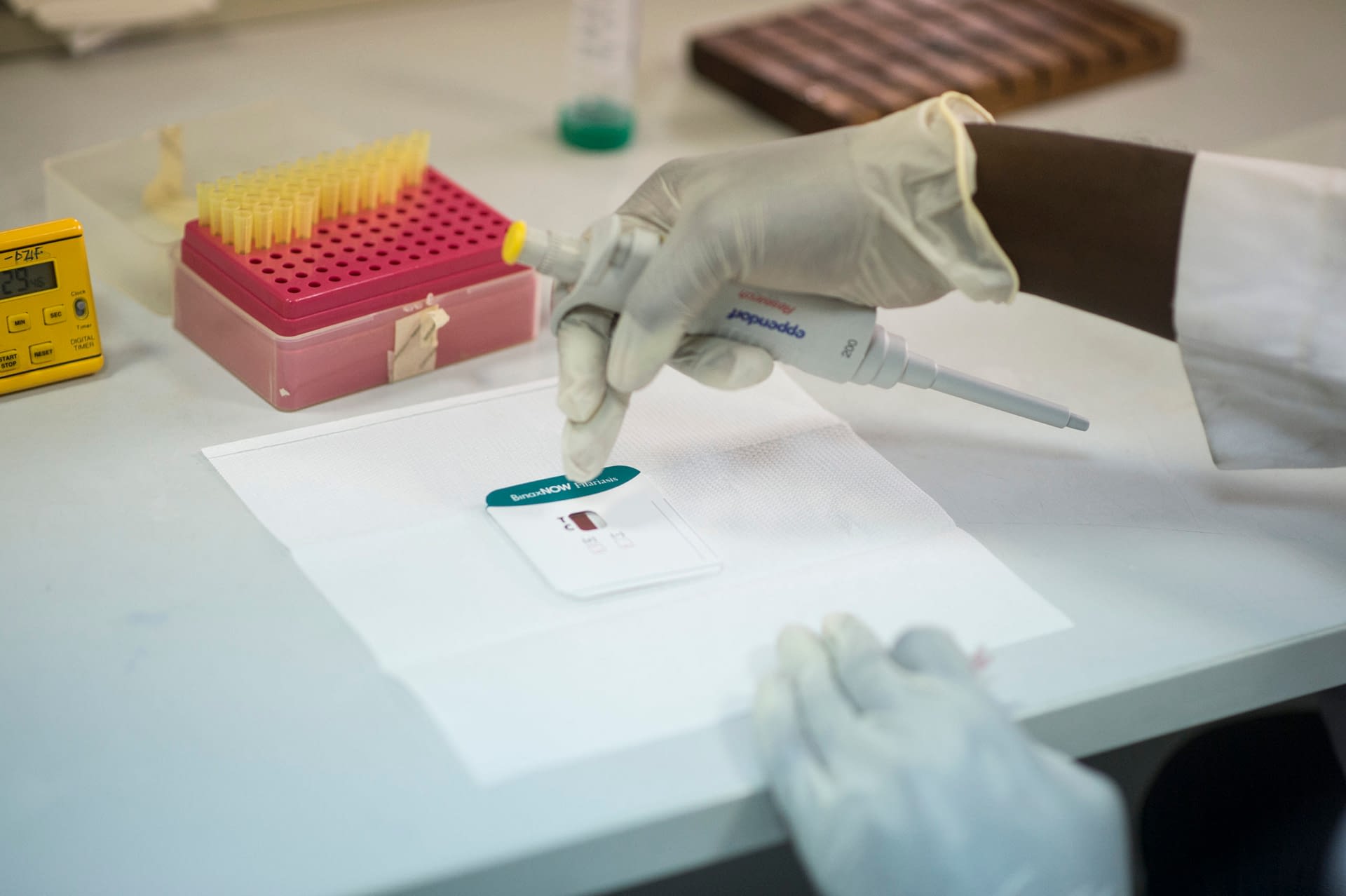
  • Macro-filaricide 3: Following a drug repurposing strategy, completion of screening of compounds against Onchocerca gutturosa and Onchocerca lienalis identified several hits and leads. Screened compounds have been provided by a number of pharmaceutical companies and belong to well-characterized chemical series which have been extensively optimized for other indications. Although the project was quite successful, none of the identified hits had the right profile to become a drug candidate for filarial diseases. Further lead optimization has been undertaken in collaboration with industrial partners. These efforts will continue throughout 2017, with the aim of delivering a pre-clinical candidate for filarial diseases.


Translation

Translation

Two projects in the translation phase:

  • Emodepside1: Originating from the Japanese pharmaceutical company Astellas, emodepside has been developed and is currently commercialized by Bayer Animal Health as an anti-helmintic veterinary drug for cats and dogs. DNDi has a collaboration agreement with Bayer to jointly develop emodepside for the treatment of onchocerciasis. Emodepside entered into healthy volunteer Phase I studies in 2016. The Single Ascending Dose Study will be completed in 2017 while the protocols for the Multiple Dose Study will be initiated. The design of two Phase Ib studies to be performed in patients in Africa is also under finalization.
  • ABBV-4083 (TylaMac): ABBV-4083 is a derivative of Tylosin, a veterinary antibiotic which targets the worm-symbiont Wolbachia The compound is currently in full pre-clinical development for the treatment of filarial diseases. ABBV-4083 is orally available, induces a robust anti-Wolbachia effect in several in vivo models, demonstrates clear superiority over doxycycline, and is effective after a shorter dosing regimen. Preliminary safety and toxicology profiling of this compound suggests a favourable safety profile. Upon completion of enabling toxicology studies, expected in 2017, and the development of an oral formulation, a Phase I study in healthy human volunteers will be performed in 2017. The aim will be to assess the safety, tolerability and the pharmacokinetics of ABBV-4083.

[1] A collaboration agreement was signed between Bayer AG and DNDi in December 2014 – DNDi is responsible for the clinical development of emodepside and Bayer for the pre-clinical and pharmaceutical development as well as for registration, manufacturing, and distribution of the drug. Bayer AG provides the active ingredient emodepside to DNDi. Emodepside originates from the Japanese pharmaceutical company Astellas and has been developed by Bayer’s HealthCare’s Animal Health division for veterinary use. Astellas has granted Bayer AG the rights to develop emodepside along these lines.

Photo credit: Cosmos-Sylvain Cherkaoui-DNDi
River blindness Parasitic worms Lymphatic filariasis

Read, watch, share

Loading...
Statements
19 May 2026

DNDi interventions at the 79th World Health Assembly

Dr Sergio Sosa-Estani
Statements
15 May 2026

DNDi statement on hantavirus outbreak: ‘Investment in pandemic preparedness efforts remains insufficient.’

Statements
13 May 2026

DNDi’s briefing note for 79th World Health Assembly

Close up of legs with sandals on a dry soil
Press releases
12 May 2026

DNDi welcomes GHIT support for global evaluation and registration of fosravuconazole for eumycetoma, in collaboration with Eisai

Press releases
27 Apr 2026

Thailand registers ravidasvir, a simple-to-use and effective antiviral for hepatitis C, expanding treatment options for Thai patients

Stories

Lab lessons that matter: Pharmacy students help bridge the gap in research for neglected diseases

News
31 Mar 2026

DNDi is looking for a Board Treasurer to join its Board of Directors

Title copy on white and orange background, picture of Fr Robinson on the right hand
Videos
26 Mar 2026

Manufacturing medicines for NTDs, with Dr Stephen Robinson

VIEW ALL

Help neglected patients

To date, we have delivered fourteen new treatments, saving millions of lives.

Our goal is to deliver 25 new treatments in our first 25 years. You can help us get there. 

GIVE NOW
Linkedin-in Instagram Youtube X-twitter Tiktok Facebook-f
International non-profit developing safe, effective, and affordable treatments for the most neglected patients.

Learn more

  • Diseases
  • Neglected tropical diseases
  • R&D portfolio
  • Policy advocacy

Get in touch

  • Our offices
  • Contact us
  • Integrity Line

Support us

  • Donate
  • Subscribe to eNews

Work with us

  • Join research networks
  • Jobs
  • RFPs
  • Terms of Use   
  •   Acceptable Use Policy   
  •   Privacy Policy   
  •   Cookie Policy   
  •   Our policies   

  • Except for images, films, and trademarks which are subject to DNDi’s Terms of Use, content on this site is licensed under a Creative Commons Attribution-NonCommercial-ShareAlike 4.0 International license