Patients first
In conversation with Violet Naanyu
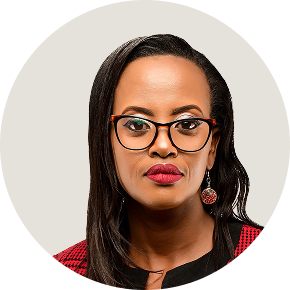
Associate Professor at Moi University in Kesses, Kenya and Visiting Scientist at Aga Khan University in Nairobi, Violet Naanyu joined the DNDi Board of Directors as Patient Representative in 2025. Having conducted community-engaged research across areas as diverse as HIV care, vaccine acceptance, and hypertension management, she shares her perspective on why medical innovation must be grounded in genuine partnerships with the communities it aims to serve.
How would you describe the value of community engagement in medical research for someone new to the idea? What does good engagement look like?
Medical research is resource-intensive. Anyone who takes it on should invest in ensuring it has real-world relevance and will leave something valuable and lasting behind. Community engagement helps increase the acceptance, feasibility, and long-term positive impact of research projects.
Involving patients and communities meaningfully in the design and implementation of research builds mutual trust. When local stakeholders feel ownership in the scientific work, it makes it easier to understand their real needs and preferences and, consequently, to design appropriate tools and solutions for their context. It also boosts the potential that evidence can be translated into sustainable change.
Good engagement is deliberate and action-oriented. You start by mapping stakeholders and building representative community advisory boards empowered to help shape decisions. It’s a two-way exchange: the research team learns from the community’s experience, and the community gains from science that is designed to understand and address their needs and realities.
There are important distinctions between being a subject of research and a participant in it. How do you see the difference – and why does it matter?
Whenever I think about the word ‘subject’, my mind goes to the colonial era. To be a subject then meant you owed allegiance to a foreign government without the fundamental rights of a real citizen. It was a relationship of unequal power: one active player, one passive – the passive subject stripped of agency.
Medical research can fall into the same trap. A subject is treated as a passive source of data; a participant is something else entirely – an active partner, involved at every stage of the scientific process.
And this matters enormously for neglected diseases, because we are so often working with people who are already shut out from essential services and economic opportunity, often facing illness in very isolated communities with little access to quality healthcare. They frequently become passive recipients of whatever science arrives on their doorstep. Working with integrity as a researcher means keeping these realities in mind and committing to working with and through neglected communities to advance science.
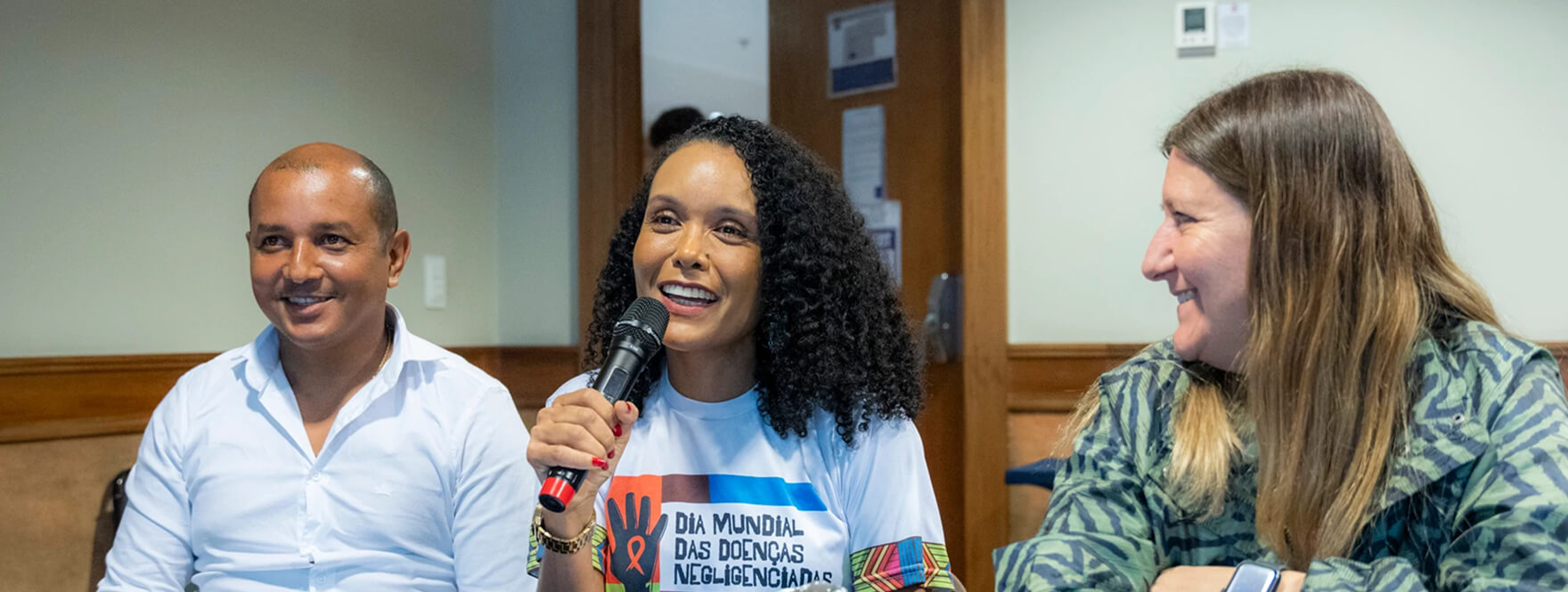
ALEX LAGO (Brazilian Association for Leishmaniasis), POLLYANA MEDEIROS (Movement for the Reintegration of Persons Affected by Hansen’s Disease, Brazil), and LORENA DI GIANO (Fundación Grupo Efecto Positivo, Argentina) participate in the inaugural meeting of DNDi’s Community Advisory Committee for Latin America, held in Rio de Janeiro in September 2025.
How would you contrast traditional, top-down research with community-led research? In which category do most clinical trials sit today?
In the top-down model, academics make all the decisions: what is worth studying, what methods are used, and how the study is run. When their research is complete, they often leave with their data and study specimens in hand. In community-led research, communities are the lead actors; they own the process, name their own problems, and invite researchers to help solve them.
Most clinical trials still sit firmly in that first camp, with communities treated as passive sources of data. I think that a careful blend of the two models is ideal. We still need academics out front, lending expertise and building on the work of others in their discipline to move science forward. But we also need to end the practice of treating participants as subjects and move towards real partnership, transparency, and genuine sharing of power, data, and resources. This requires intentional reflection before, during, and after clinical research is conducted to ensure appropriate community engagement throughout the project cycle. In my own work, what’s made that hybrid possible is having a qualified local principal investigator working alongside community and scientific advisory boards.
DNDi has established Community Advisory Committees in Africa, Latin America, and South Asia. How do you see their role in shaping DNDi’s decisions and strategic priorities?
The Committees can be instrumental in strengthening and streamlining meaningful engagement with people affected by neglected diseases across our research programmes. Most important is their ability to help ensure our research remains grounded in what patients and communities actually need. They can press us to continue exploring areas of unmet need that we may be well placed to address and help steer resources to initiatives with the greatest chance of positively impacting patients’ lives. They can also facilitate continuous reflection and improvement in critical areas like informed consent, community participation and feedback, sharing outcomes and results, and translating evidence into better policy and practice.
From your vantage point in your new role as Patient Representative on the Board of Directors, where should DNDi teams and partners focus their energy to deepen patient and community engagement in the coming years?
Empowering patient groups and the advocates who represent them should remain a constant focus. Continuing to build from their perspectives is essential for achieving health equity and safeguarding patients’ rights and dignity. That can really only come through relationships that centre on transparency, dialogue, and continuous feedback. I am happy to be a part of making this a cornerstone of the progress we are making in medical innovation to meet the needs of underserved communities.
More 2025 highlights:
Photo credits: Lameck Ododo-DNDi; Ana Rezende-DNDi.
Stay connected
Get our latest news, personal stories, research articles, and job opportunities.