Stronger together
How we are joining forces to keep our promise to neglected patients
The ground beneath global health is shifting. Donor budgets are shrinking, aid commitments are unravelling, and the multilateral cooperation that drove decades of progress is under strain. A clear reckoning is underway: governments and funders are calling for a less fragmented system, led by the countries bearing the heaviest burden of disease. A World Health Organization (WHO) joint process on global health architecture reform and the Accra Reset – a heads-of-state-led push for country sovereignty over donor dependence – are two major initiatives among many focused on delivering this change.
Reform is in the making, but it must be clear about its purpose. A global health system that fails to discover and develop missing health tools will fail the people it serves. We cannot meet today’s challenges – let alone tomorrow’s – with yesterday’s medicines. With pathogens evolving, drug resistance outpacing current medicines, and diseases spreading due to climate change, medical innovation cannot be treated as an optional extra to trade away for efficiency or savings. It is a core function of the system.
Better treatments, diagnostics, and vaccines have brought hope and security to marginalized communities around the world. They have also been the key to making disease elimination a reality. Yet the engines that have powered this scientific progress are faltering. Large pharmaceutical companies have long been indispensable partners, sharing the compound libraries, expertise, and in-kind support that needs-driven R&D is built upon. Over recent years, many have stopped work in infectious disease research in favour of more profitable markets. Others have outsourced essential functions. Either way, vital knowledge and capacity are lost and scattered.
The growing pressures of donor cuts and private-sector disengagement mean that organizations that exist to deliver medical innovation for underserved communities must double down on what we stand for.
Putting proof to the test
There is reason to be hopeful in staying the course. Not-for-profit product development partnerships (PDPs) like DNDi have delivered more than 79 new medicines, vaccines, and diagnostics to 2.4 billion people since 2010. Sustaining this track record requires commitment: leadership from endemic countries, new alliances between them, new financing streams, and new investment in scientific talent and infrastructure in the Global South.
Over more than two decades of delivering on our mission, DNDi teams have assembled expertise building one of the broadest disease portfolios in global health, with cross-cutting skills across parasitic, viral, and fungal diseases that are needed to turn a promising molecule into an approved medicine – from drug discovery and chemistry, manufacturing, and controls (CMC) to clinical operations, regulatory sciences, and implementation. Our mature partnerships and expert teams in countries most affected by neglected diseases enable us to align these capacities in service to new national and regional alliances working to reshape innovation, manufacturing, and healthcare delivery to meet their populations’ needs. We are deepening collaboration with our fellow PDPs to help power these ambitions: pooling expertise, cutting duplication, and putting scarce, specialized capacity to work for more patients.
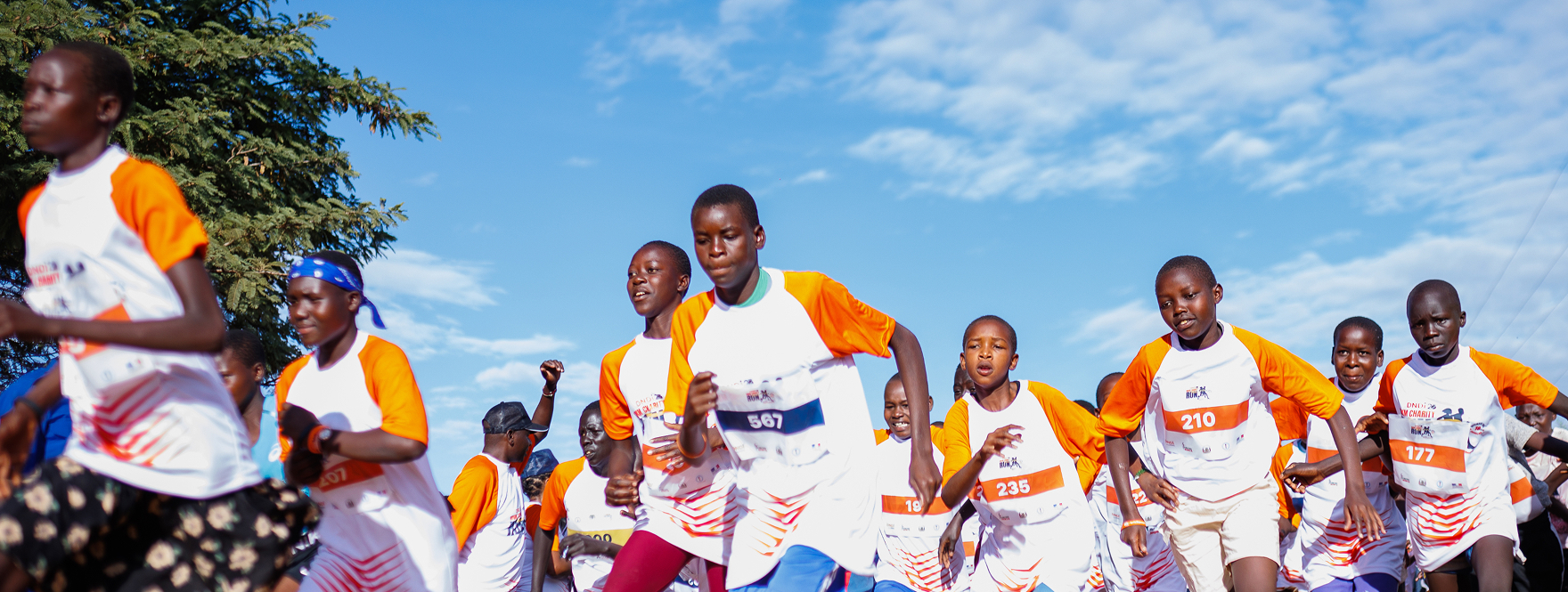
CHILDREN FROM KACHELIBA, KENYA and nearby communities participate in a DNDi-sponsored charity run held to mobilize support for neglected patients and raise awareness about neglected diseases. We have worked with partners in Kacheliba since 2005 to conduct clinical trials and improve access to treatment for visceral leishmaniasis.
Pooling strength with our peers
Collaboration among PDPs is not new for us. Since 2016, DNDi and the Global Antibiotic Research & Development Partnership (GARDP) – which DNDi helped co-create with WHO – have shared back-office functions, joint procurement, IT systems, and co-located offices, enabling substantial cost savings and opening new opportunities for mutual learning and support. What is new is the deliberate move to anchor this sharing at the heart of our scientific programmes.
DNDi, GARDP, and Medicines for Malaria Venture (MMV) have recently entered a strategic cooperation agreement to pool expertise and resources, sharpen efficiency, and speak with one voice as calls to reform the global health architecture multiply. The aim is straightforward: make the most of limited R&D resources and make them go further for patients.
Two joint platforms established with our partner PDPs show what this looks like in practice. The DNDi-GARDP CMC Platform tackles a costly, often-overlooked problem. Every year, medicines proven to be safe and effective are rejected by regulators due to shortcomings in how they are manufactured. By pooling know-how, the platform reduces duplication, increases the likelihood of technical success, and helps bring quality-assured, affordable treatments to patients. The payoff can be decisive. The platform has already played an instrumental role in the successful development, scale-up, registration, and production of two game-changing treatments: acoziborole, DNDi and partners’ new single-dose treatment for sleeping sickness, and zoliflodacin, GARDP and partners’ new antibiotic for gonorrhoea – the first to be developed specifically for the disease in decades.
The new DNDi-MMV Joint Regulatory Platform – the first of its kind between two non-profit research organizations – confronts a fragmented regulatory landscape in which registering a medicine can face entirely different requirements across countries. By aligning regulatory strategy and engaging authorities with one voice, the alliance aims to shorten registration timelines and help set new standards where none yet exist. In practice, it works on two levels at once: aligning on the regulatory roadmap and clinical data requirements for individual medicines, and pooling regulatory intelligence to carve clearer pathways across the wider field – so that hard-won lessons from one programme can guarantee success in the next.
As we work with partners to map out further areas of operational alignment – from expanding our use of AI across the R&D lifecycle to joint clinical operations – we are confident that new scientific and operational alliances will allow us to do more together to keep our promises to patients as the system they rely on is reimagined and remade.
More 2025 highlights:
Photo credits: Xavier Vahed-DNDi; Lameck Ododo-DNDi.
Stay connected
Get our latest news, personal stories, research articles, and job opportunities.