• DNDi_Logo_No-Tagline_Full Colour
  • Our work
    • Diseases
      • Sleeping sickness
      • Visceral leishmaniasis
      • Cutaneous leishmaniasis
      • Chagas disease
      • Parasitic worms
      • Mycetoma
      • Dengue
      • Paediatric HIV
      • Cryptococcal meningitis
      • Hepatitis C
      • Pandemic preparedness
      • Antimicrobial resistance
    • Research & development
      • R&D portfolio & list of projects
      • Drug discovery
      • Translational research
      • Clinical trials
      • Registration & access
      • Treatments delivered
    • Advocacy
      • Open and collaborative R&D
      • Transparency of R&D costs
      • Pro-access policies and IP
      • Children’s health
      • Gender equity
      • Climate change
      • AI and new technologies
  • Networks & partners
    • Partnerships
      • Our partners
      • Partnering with us
    • Global networks
      • Chagas Platform
      • Dengue Alliance
      • HAT Platform
      • LEAP Platform
      • redeLEISH Network
    • DNDi worldwide
      • DNDi Switzerland
      • DNDi Eastern Africa
      • DNDi Japan
      • DNDi Latin America
      • DNDi North America
      • DNDi South Asia
      • DNDi South-East Asia
      • DNDi West and Central Africa
  • News & resources
    • News & stories
      • News
      • Stories
      • Statements
      • Viewpoints
      • Social media
      • eNews Newsletter
    • Press
      • Press releases
      • In the media
      • Podcasts, radio & TV
      • Media workshops
    • Resources
      • Scientific articles
      • Our publications
      • Videos
    • Events
  • About us
    • About
      • Who we are
      • Our story
      • How we work
      • Our strategy
      • Our donors
      • Annual reports
      • Our prizes and awards
    • Our people
      • Our leadership
      • Our governance
      • Contact us
    • Work with us
      • Working at DNDi
      • Job opportunities
      • Requests for proposal
  • Donate
  • DNDi_Logo_No-Tagline_Full Colour
  • Our work
    • Diseases
      • Sleeping sickness
      • Visceral leishmaniasis
      • Cutaneous leishmaniasis
      • Chagas disease
      • Parasitic worms
      • Mycetoma
      • Dengue
      • Paediatric HIV
      • Cryptococcal meningitis
      • Hepatitis C
      • Pandemic preparedness
      • Antimicrobial resistance
    • Research & development
      • R&D portfolio & list of projects
      • Drug discovery
      • Translational research
      • Clinical trials
      • Registration & access
      • Treatments delivered
    • Advocacy
      • Open and collaborative R&D
      • Transparency of R&D costs
      • Pro-access policies and IP
      • Children’s health
      • Gender equity
      • Climate change
      • AI and new technologies
  • Networks & partners
    • Partnerships
      • Our partners
      • Partnering with us
    • Global networks
      • Chagas Platform
      • Dengue Alliance
      • HAT Platform
      • LEAP Platform
      • redeLEISH Network
    • DNDi worldwide
      • DNDi Switzerland
      • DNDi Eastern Africa
      • DNDi Japan
      • DNDi Latin America
      • DNDi North America
      • DNDi South Asia
      • DNDi South-East Asia
      • DNDi West and Central Africa
  • News & resources
    • News & stories
      • News
      • Stories
      • Statements
      • Viewpoints
      • Social media
      • eNews Newsletter
    • Press
      • Press releases
      • In the media
      • Podcasts, radio & TV
      • Media workshops
    • Resources
      • Scientific articles
      • Our publications
      • Videos
    • Events
  • About us
    • About
      • Who we are
      • Our story
      • How we work
      • Our strategy
      • Our donors
      • Annual reports
      • Our prizes and awards
    • Our people
      • Our leadership
      • Our governance
      • Contact us
    • Work with us
      • Working at DNDi
      • Job opportunities
      • Requests for proposal
  • Donate
Home > News

Hepatitis C: Current barriers to treat patients and DNDi’s R&D strategy to address urgent needs

13 Apr 2016

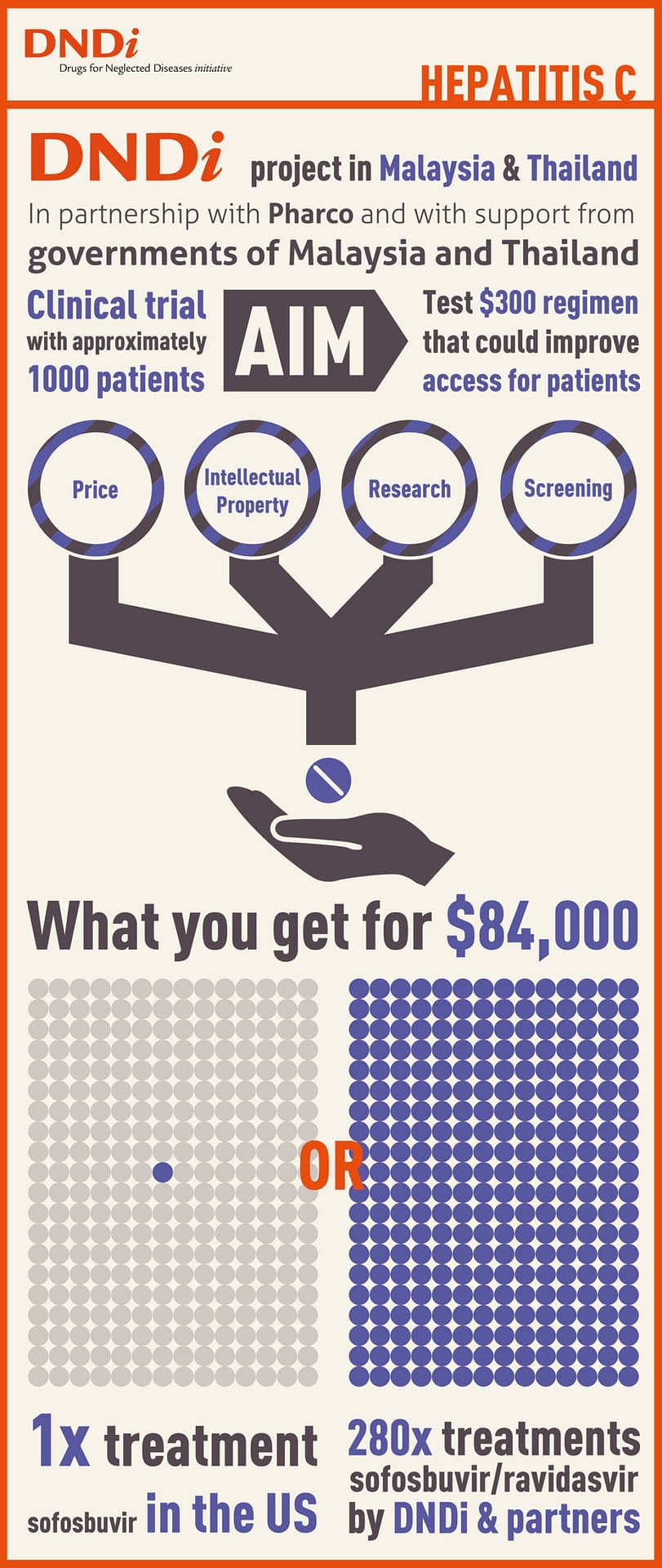
DNDi, the Egyptian drug manufacturer Pharco Pharmaceuticals, and the Ministry of Health Malaysia announced today at the International Liver Congress in Barcelona, Spain, that they signed agreements to test an affordable hepatitis C regimen in Malaysia and Thailand. The treatment, a potentially pan-genotypic combination of ravidasvir and sofosbuvir, will be tested in Malaysia and Thailand with a target price of under $300. Read the press release

Hepatitis C R&D StrategyDNDi also presented its research & development strategy for hepatitis C: ‘An Alternative Research and Development Strategy to Deliver Affordable Treatments for Hepatitis C Patients: The Drugs for Neglected Diseases initiative’s hepatitis C drug development strategy based on patient needs, not profits’. DNDi will focus on the creation of a short-course, affordable, easy-to-use, highly efficacious, safe, and all-oral pan-genotypic regimen that will enable countries to implement a public health approach to the hepatitis C epidemic.

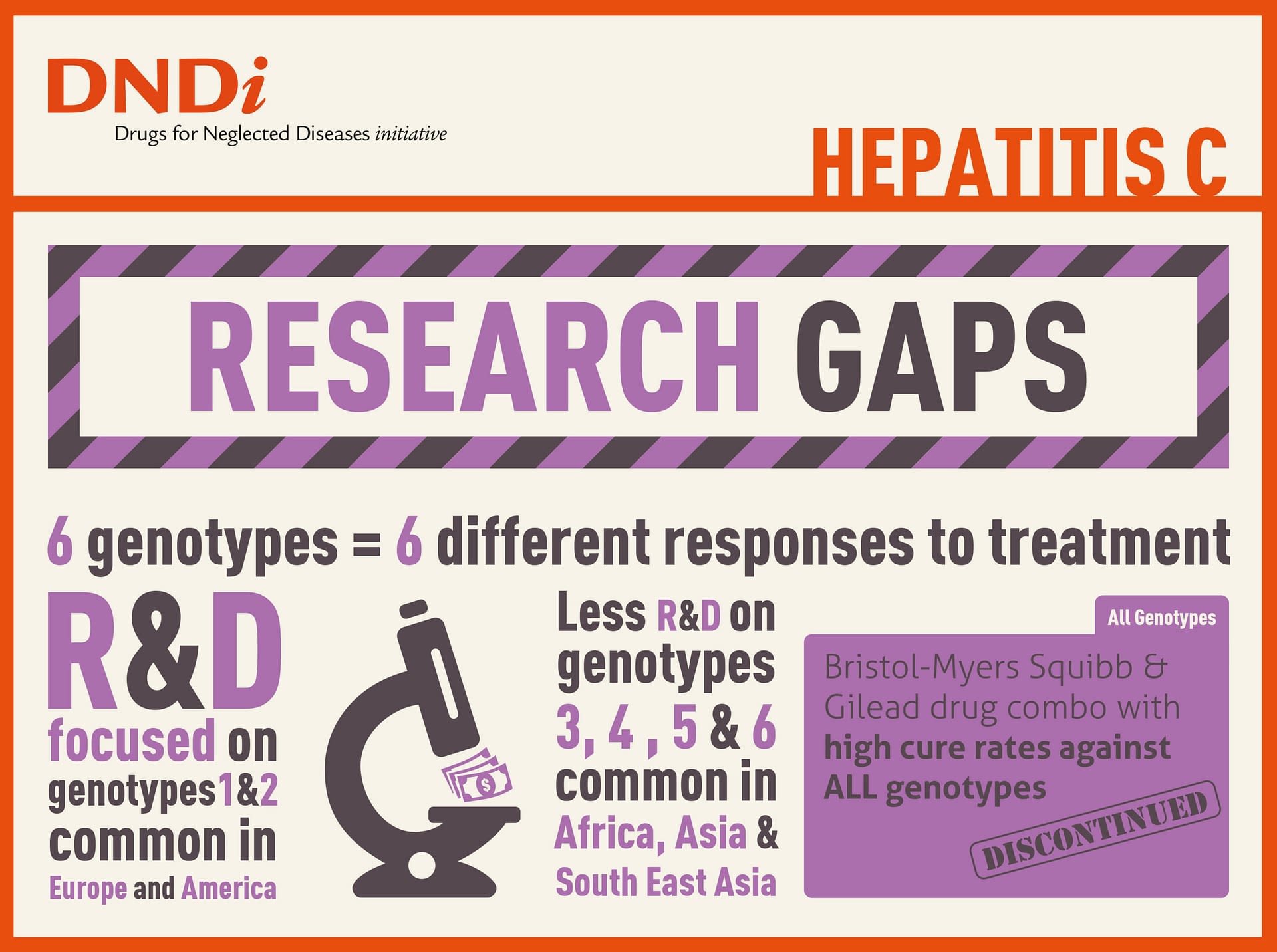
The race to approve blockbuster hepatitis C treatments in the United States, Europe, and other high-income countries has not only led to exorbitant drug prices but has also neglected certain patient populations. Under the current R&D model, research has prioritized genotypes that are predominant in Europe and America.

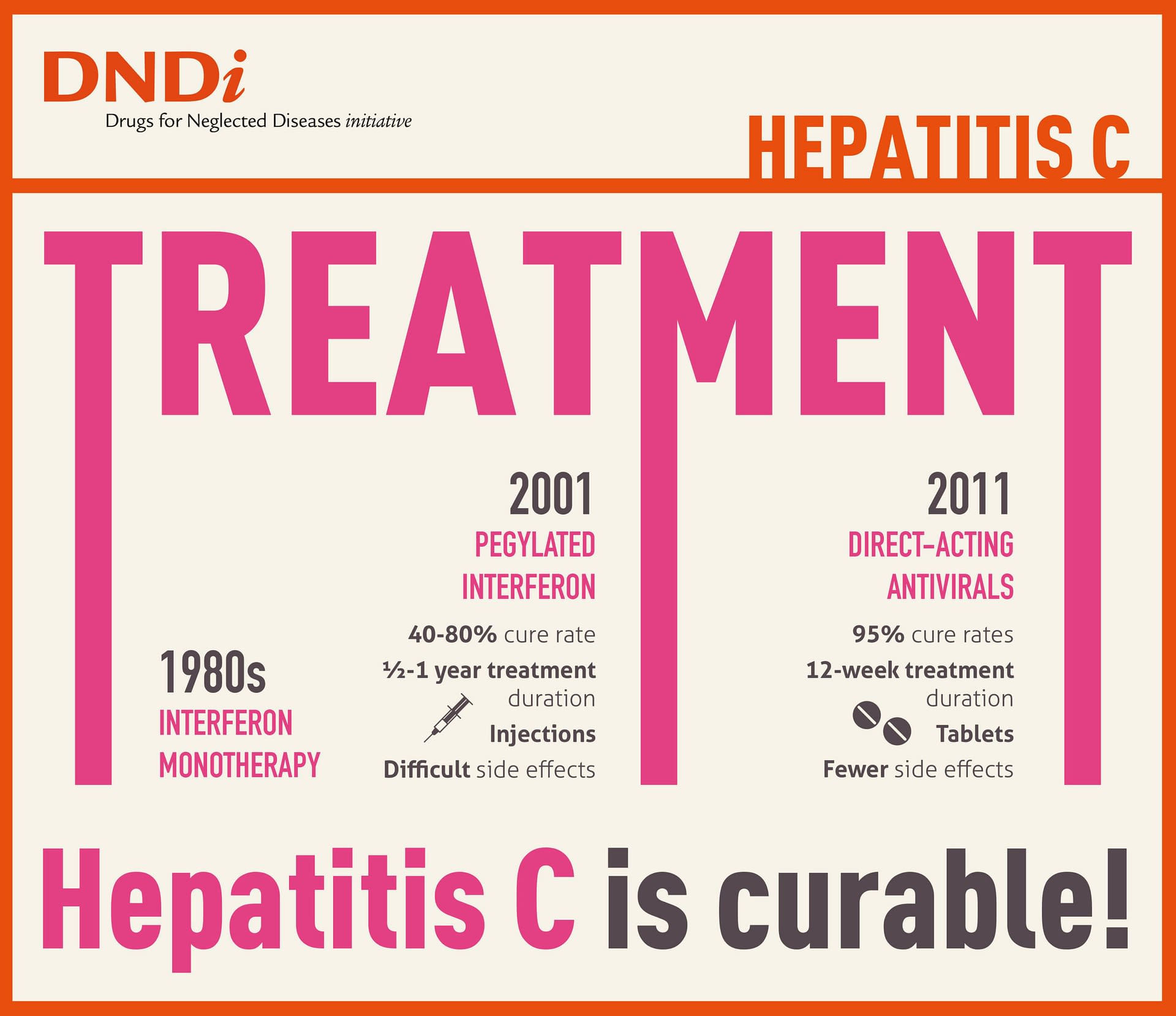
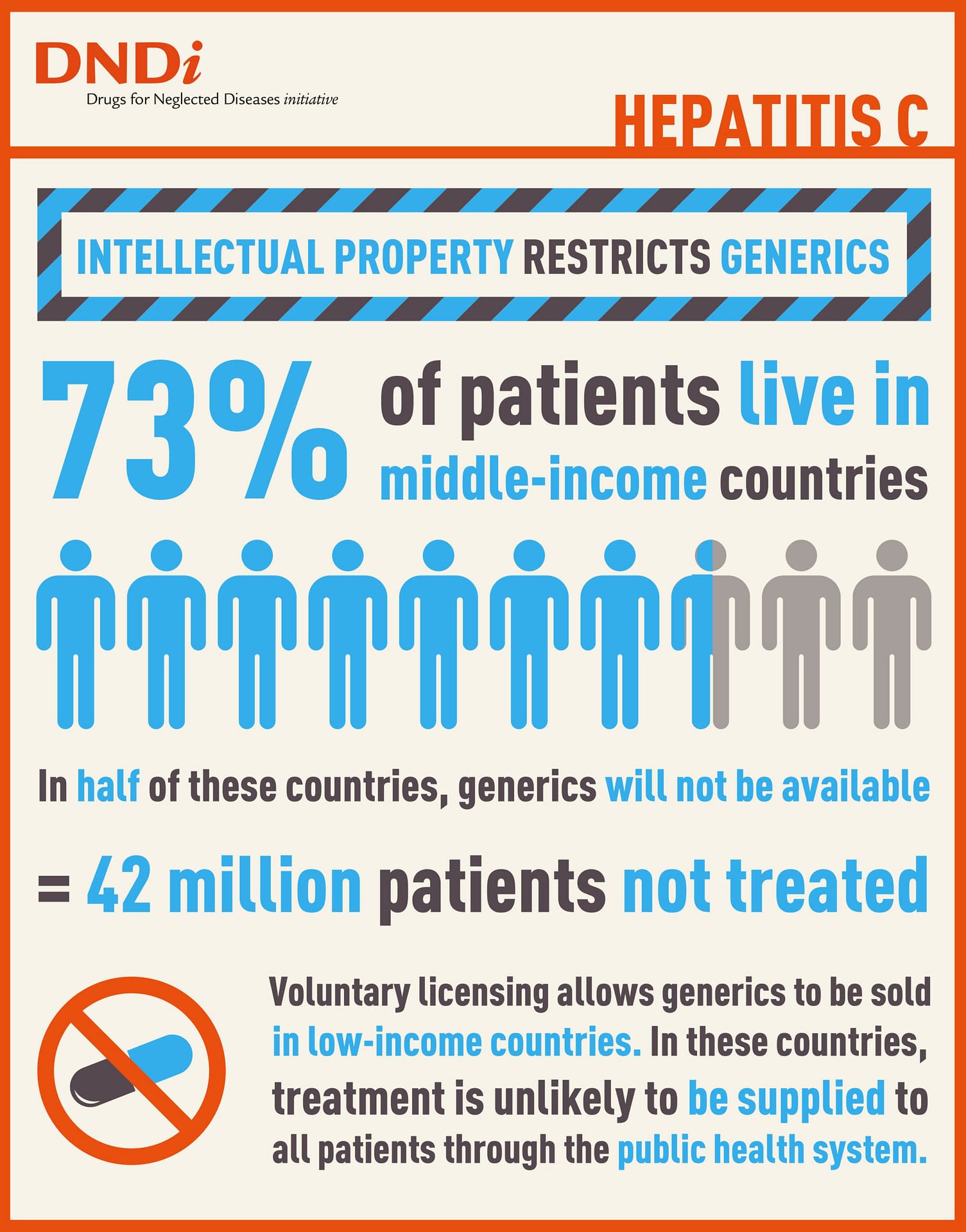
Hepatitis C patients are neglected because there are severe barriers to accessing treatment: exorbitant prices, intellectual property that restricts generics, research gaps, and a lack of screening. DNDi has created infographics to explain why there are so many neglected hepatitis C patients and the DNDi project.

Infographics
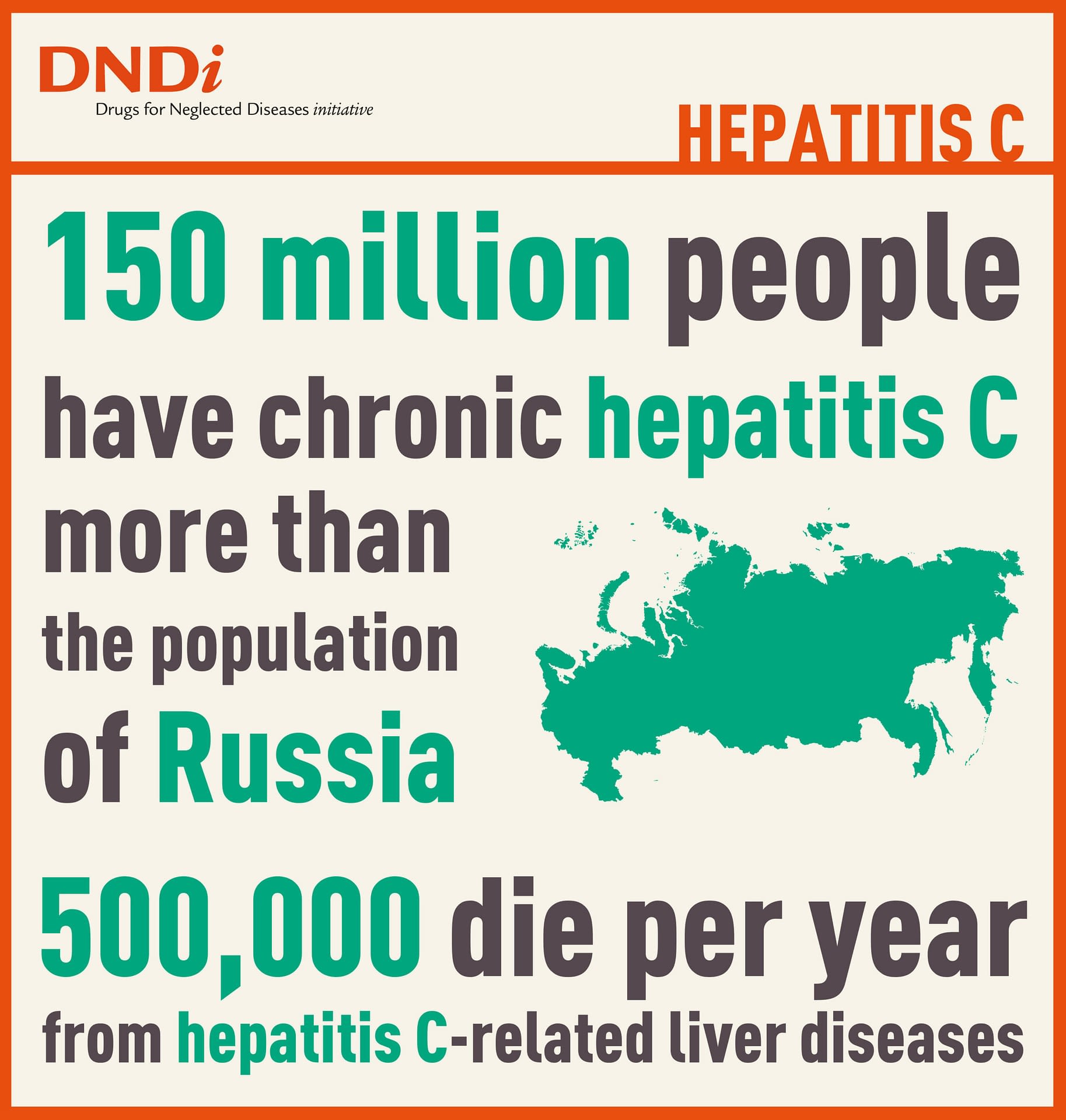
DNDi_HepC_Infographic_GlobalDNDi_HepC_Infographic_TreatmentDNDi_HepC_Infographic_Price DNDi_HepC_Infographic_IP DNDi_HepC_Infographic_Research DNDi_HepC_Infographic_Screening
DNDi_HepC_Infographic_DNDiProject

Download Hepatitis C Infographic Images
Download Hepatitis C Infographic PDF

Read more about DNDi‘s work on hepatitis C

Hepatitis C

Read, watch, share

Loading...
Press releases
10 Feb 2026

DNDi and Dubai Health launch Middle East partnership to advance research and training in neglected diseases

Statements
10 Feb 2026

Statement on Brazil’s draft National Action Plan for Antimicrobial Resistance

Statements
3 Feb 2026

DNDi interventions at the 158th Session of the WHO Executive Board

Sir Nicholas White
News
2 Feb 2026

Message on the passing of Professor Sir Nicholas White from DNDi Board Chair Dr Marie-Paule Kieny and DNDi Executive Director Dr Luis Pizarro

News
30 Jan 2026

Imperial and DNDi strengthen partnership to accelerate treatments for neglected diseases 

News
30 Jan 2026

Science can end the neglect: but only if we act together – World NTD Day 2026

From risk to remedy: Fast-tracking the end of sleeping sickness
Videos
28 Jan 2026

From risk to remedy: Fast-tracking the end of sleeping sickness

Dr Joseph Gichuru, Deputy Executive Director and the Director of Operations, APHRC, and Prof. Samuel Kariuki, Continental Lead Africa and Eastern Africa Director, DNDi
News
27 Jan 2026

DNDi and APHRC sign MoU to forge strategic alliance to bridge research and capacity enhancement gaps

VIEW ALL

Help neglected patients

To date, we have delivered thirteen new treatments, saving millions of lives.

Our goal is to deliver 25 new treatments in our first 25 years. You can help us get there. 

GIVE NOW
Linkedin-in Instagram Twitter Facebook-f Youtube
International non-profit developing safe, effective, and affordable treatments for the most neglected patients.

Learn more

  • Diseases
  • Neglected tropical diseases
  • R&D portfolio
  • Policy advocacy

Get in touch

  • Our offices
  • Contact us
  • Integrity Line

Support us

  • Donate
  • Subscribe to eNews

Work with us

  • Join research networks
  • Jobs
  • RFPs
  • Terms of Use   
  •   Acceptable Use Policy   
  •   Privacy Policy   
  •   Cookie Policy   
  •   Our policies   

  • Except for images, films, and trademarks which are subject to DNDi’s Terms of Use, content on this site is licensed under a Creative Commons Attribution-NonCommercial-ShareAlike 4.0 International license