
• DNDi_Logo_No-Tagline_Full Colour
  • Our work
    • Diseases
      • Sleeping sickness
      • Visceral leishmaniasis
      • Cutaneous leishmaniasis
      • Chagas disease
      • Parasitic worms
      • Mycetoma
      • Dengue
      • Paediatric HIV
      • Cryptococcal meningitis
      • Hepatitis C
      • Pandemic preparedness
      • Antimicrobial resistance
    • Research & development
      • R&D portfolio & list of projects
      • Drug discovery
      • Translational research
      • Clinical trials
      • Registration & access
      • Evidence for impact
      • Treatments delivered
    • Advocacy
      • Open and collaborative R&D
      • Transparency of R&D costs
      • Pro-access policies and IP
      • Children’s health
      • Gender equity
      • Climate change
      • AI and new technologies
  • Networks & partners
    • Partnerships
      • Our partners
      • Partnering with us
    • Global networks
      • Chagas Platform
      • Dengue Alliance
      • HAT Platform
      • LEAP Platform
      • redeLEISH Network
    • DNDi worldwide
      • DNDi Switzerland
      • DNDi Eastern Africa
      • DNDi Japan
      • DNDi Latin America
      • DNDi North America
      • DNDi South Asia
      • DNDi South-East Asia
      • DNDi West and Central Africa
  • News & resources
    • News & stories
      • News
      • Stories
      • Statements
      • Viewpoints
      • Social media
      • eNews Newsletter
    • Press
      • Press releases
      • In the media
      • Podcasts, radio & TV
      • Media workshops
    • Resources
      • Scientific articles
      • Our publications
      • Videos
    • Events
  • About us
    • About
      • Who we are
      • Our story
      • How we work
      • Our strategy
      • Our donors
      • Annual reports
      • Our prizes and awards
    • Our people
      • Our leadership
      • Our governance
      • Contact us
    • Work with us
      • Working at DNDi
      • Job opportunities
      • Requests for proposal
  • Donate
  • DNDi_Logo_No-Tagline_Full Colour
  • Our work
    • Diseases
      • Sleeping sickness
      • Visceral leishmaniasis
      • Cutaneous leishmaniasis
      • Chagas disease
      • Parasitic worms
      • Mycetoma
      • Dengue
      • Paediatric HIV
      • Cryptococcal meningitis
      • Hepatitis C
      • Pandemic preparedness
      • Antimicrobial resistance
    • Research & development
      • R&D portfolio & list of projects
      • Drug discovery
      • Translational research
      • Clinical trials
      • Registration & access
      • Evidence for impact
      • Treatments delivered
    • Advocacy
      • Open and collaborative R&D
      • Transparency of R&D costs
      • Pro-access policies and IP
      • Children’s health
      • Gender equity
      • Climate change
      • AI and new technologies
  • Networks & partners
    • Partnerships
      • Our partners
      • Partnering with us
    • Global networks
      • Chagas Platform
      • Dengue Alliance
      • HAT Platform
      • LEAP Platform
      • redeLEISH Network
    • DNDi worldwide
      • DNDi Switzerland
      • DNDi Eastern Africa
      • DNDi Japan
      • DNDi Latin America
      • DNDi North America
      • DNDi South Asia
      • DNDi South-East Asia
      • DNDi West and Central Africa
  • News & resources
    • News & stories
      • News
      • Stories
      • Statements
      • Viewpoints
      • Social media
      • eNews Newsletter
    • Press
      • Press releases
      • In the media
      • Podcasts, radio & TV
      • Media workshops
    • Resources
      • Scientific articles
      • Our publications
      • Videos
    • Events
  • About us
    • About
      • Who we are
      • Our story
      • How we work
      • Our strategy
      • Our donors
      • Annual reports
      • Our prizes and awards
    • Our people
      • Our leadership
      • Our governance
      • Contact us
    • Work with us
      • Working at DNDi
      • Job opportunities
      • Requests for proposal
  • Donate
Home > Viewpoints

Advocacy for sustainable elimination strategy for sleeping sickness

6 Dec 2012

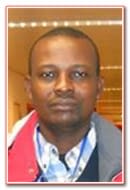
Florent MboViewpoint by

Dr Florent Mbo Kuikumbi, Provincial coordinating physician of North Bandundu for the National Human African Trypanosomiasis Control Programme (DRC)

Sleeping sickness has several facets. We have to cover all of the endemic areas with surveillance efforts, otherwise there will always be pockets than can later lead to epidemics. Today, for example, in Bandundu Province in the DRC, we can only say we are controlling the disease, not eliminating it. We have to be able to cover all of the disease pockets and follow them for some time.

[Français]

We can treat the patients at the level of the community, but the vector – the tse tse fly – that transmits the parasites from an infected person to a healthy one is still out there and will continue to transmit the disease as long as people are carrying the parasite. We have noticed in certain areas where we have treated all the patients we found, the disease re-emerges within a year or two. We have to cover all the pockets with screening – active and passive screening. We have to diagnose and treat all those with the disease.

Today we are hearing alarm bells as the Belgian Technical Cooperation project – which currently finances up to 75% of the control programme – is coming to a close in June of the 2013. If the majority of the activities of the mobile teams and the programme stop, we are looking at a situation that we have already seen in the past: surveillance decreases, and the disease re-emerges even to epidemic proportions. You go to a village and people everywhere are sick, entire villages in a slumber. That is the risk.

Here in Bandundu Province, we will clearly go beyond the entire number of reported cases for the year 2011, and this before the close of year. In 2011 over the entire year, we recorded 1437 new cases only in the northern section of the province, but in the first semester 2012 we are already at 1025 cases so we may see double the amount of cases by the end of the year. So if, in the month of June 2013, the control programme activities cease due to lack of financing, there will be zones that are not visited, vector control will cease, active screening will cease. As the disease touches the poorest of the poor, the victims do not and can not come to health centres on their own. We see them in the villages, and the mobile teams are their only means to accessing healthcare. By the time they do come to the health centres, the disease is often already at the advanced stage. This is a real problem.

Advocacy must continue so that we can ensure a transition period in which we engage with new partners to avoid reverting to situations of stark re-emergence of the disease. We have already begun to integrate the HAT programme activities into the health system more ‘horizontally’, but much more needs to be done for before we get there and cover all the needs. Better diagnostics, an oral treatment for both stages of the disease, continued surveillance, and sustainable financing are all part of what it will take to truly tackle the disease. We are clearly not at the brink of elimination.

Dr Florent Mbo Kuikumbi
Provincial coordinating physician of North Bandundu for the National Human African Trypanosomiasis Control Programme (DRC)

Click here to access MSF Press Release on sustainable funding for HAT national control activities.

Sleeping sickness

Read, watch, share

Loading...
Press releases
8 Jul 2026

Brazil, Malaysia, and Thailand set to start global clinical trial to test promising dengue treatment developed by Serum Institute of India

Patricia, 44, from Area 44 in Lilongwe, Malawi, has lived with vision loss for 10 years following a late diagnosis of cryptococcal meningitis.
Stories
30 Jun 2026

Cryptococcal meningitis: Africa’s neglected HIV killer

News
29 Jun 2026

Eric Easom, Dr Marcus Lacerda, and Mathieu Lamiaux join the DNDi Board of Directors 

Publications
29 Jun 2026

Advancing global health innovation through Europe-Africa collaboration

Mamadou Diop senior health technician - biologist at CERPAD Lab at Gaston Berger University
Stories
17 Jun 2026

The DNDi-MMV Joint Regulatory Platform: ‘a pioneering programme project for non-profit medical research organizations to speak with one voice’

MASAMUNA, DR CONGO, JANUARY 2026: The mother superior of the nuns who run the local clinic is also the lab technican.
Press releases
12 Jun 2026

DRC approves the use of acoziborole, a breakthrough one-day oral treatment against sleeping sickness

Statements
9 Jun 2026

DNDi Statement at the UN Multi-Stakeholder Hearing on Pandemic Prevention, Preparedness, and Response (PPPR)

Press releases
8 Jun 2026

DNDi, GARDP, and MMV join forces to accelerate drug development for patients in greatest need

VIEW ALL

Help neglected patients

To date, we have delivered fourteen new treatments, saving millions of lives.

Our goal is to deliver 25 new treatments in our first 25 years. You can help us get there. 

GIVE NOW
Linkedin-in Instagram Youtube X-twitter Tiktok Facebook-f
International non-profit developing safe, effective, and affordable treatments for the most neglected patients.

Learn more

  • Diseases
  • Neglected tropical diseases
  • R&D portfolio
  • Policy advocacy

Get in touch

  • Our offices
  • Contact us
  • Integrity Line

Support us

  • Donate
  • Subscribe to eNews

Work with us

  • Join research networks
  • Jobs
  • RFPs
  • Terms of Use   
  •   Acceptable Use Policy   
  •   Privacy Policy   
  •   Cookie Policy   
  •   Our policies   

  • Except for images, films, and trademarks which are subject to DNDi’s Terms of Use, content on this site is licensed under a Creative Commons Attribution-NonCommercial-ShareAlike 4.0 International license