
Schistosomiasis
How do you get schistosomiasis?
Entering contaminated freshwater sources – such as rivers, lakes, and ponds – can result in infection as tiny Schistosoma larvae in the water burrow into the skin and migrate to different body systems, where they lay eggs and reproduce. The eggs cause tissue inflammation, often resulting in debilitating symptoms.
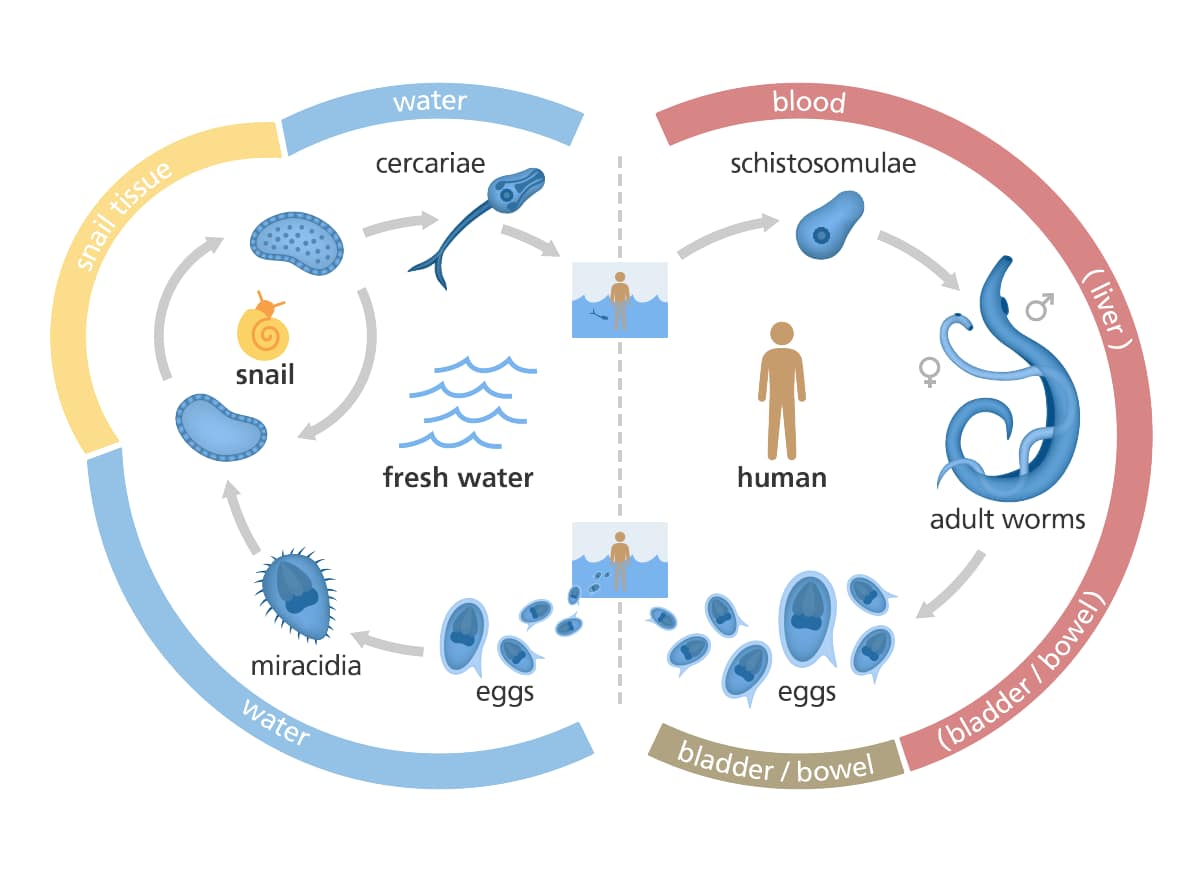
The Schistosoma lifecycle is complex. Schistosoma parasites need two different hosts – a freshwater snail and a human – to continue their lifecycle, but they do this very successfully.
- Adult Schistosoma live in human blood vessels, where the females lay eggs. The urine and faeces of people living with schistosomiasis contain some of the parasite’s eggs.
- When these eggs come into contact with fresh water, they hatch into tiny free-swimming larvae called miracidia that burrow into freshwater snails.
- Inside the snail, the miracidia multiply and produce thousands of cercariae – the next larval stage.
- The cercariae leave the snail and swim through the water in search of a human host.
- When a human enters the contaminated water, the cercariae burrow into their skin within minutes.
- Once inside the human body, the cercariae develop into schistosomula. These tiny blood-dwelling worms travel through the bloodstream to the lungs and liver, where they mature into adult worms.
- Male and female adult worms pair up in the blood vessels around the intestines and bladder, and the female worms begin producing eggs.
- Some of the eggs leave the human body via urine or faeces, starting the cycle again.
What are the symptoms of schistosomiasis?
Schistosomiasis is not often life-threatening, but it can cause long-term suffering and chronic illness.
- Intestinal schistosomiasis can cause:
- Abdominal swelling, diarrhoea, and passing blood in stools,
- Poor absorption of nutrients, anaemia, and lethargy, and;
- Stunted growth and learning difficulties in children.
- Urogenital schistosomiasis can cause:
- Blood in the urine, and
- Reproductive problems and urogenital pain.
- Female genital schistosomiasis can cause:
- Burning, pain, spot vaginal bleeding, bloody discharge, malodorous discharge, stress urinary incontinence, dyspareunia (pain during intercourse),
- Debilitating morbidity, including adverse sexual and reproductive outcomes such as infertility, miscarriage, and ectopic pregnancy,
- Increased risk of sexually transmitted infections, including HIV and human papillomavirus (HPV), and
- Discrimination, stigma, and reluctance to seek treatment due to female genital schistosomiasis symptoms being frequently mistaken for STIs.
- Schistosomiasis affecting the heart and lungs can cause shortness of breath and coughing up blood.
- Schistosomiasis affecting the brain and nervous system can cause headaches, weakness, numbness, dizziness, and seizures.
How is schistosomiasis diagnosed?
Schistosomiasis is mostly treated through mass drug administration, so systematic diagnosis is generally not performed. The most commonly used diagnostic methods involve identifying eggs in faeces or urine or detecting circulating anodic antigen in blood. Diagnostic tools and their efficacy vary depending on the Schistosoma species involved and the body system affected. There is an urgent need for better diagnostic tools for female genital schistosomiasis, which is currently diagnosed through specialized gynaecological examinations that are not available in remote or resource-constrained settings.
More information
Last updated: December 2025